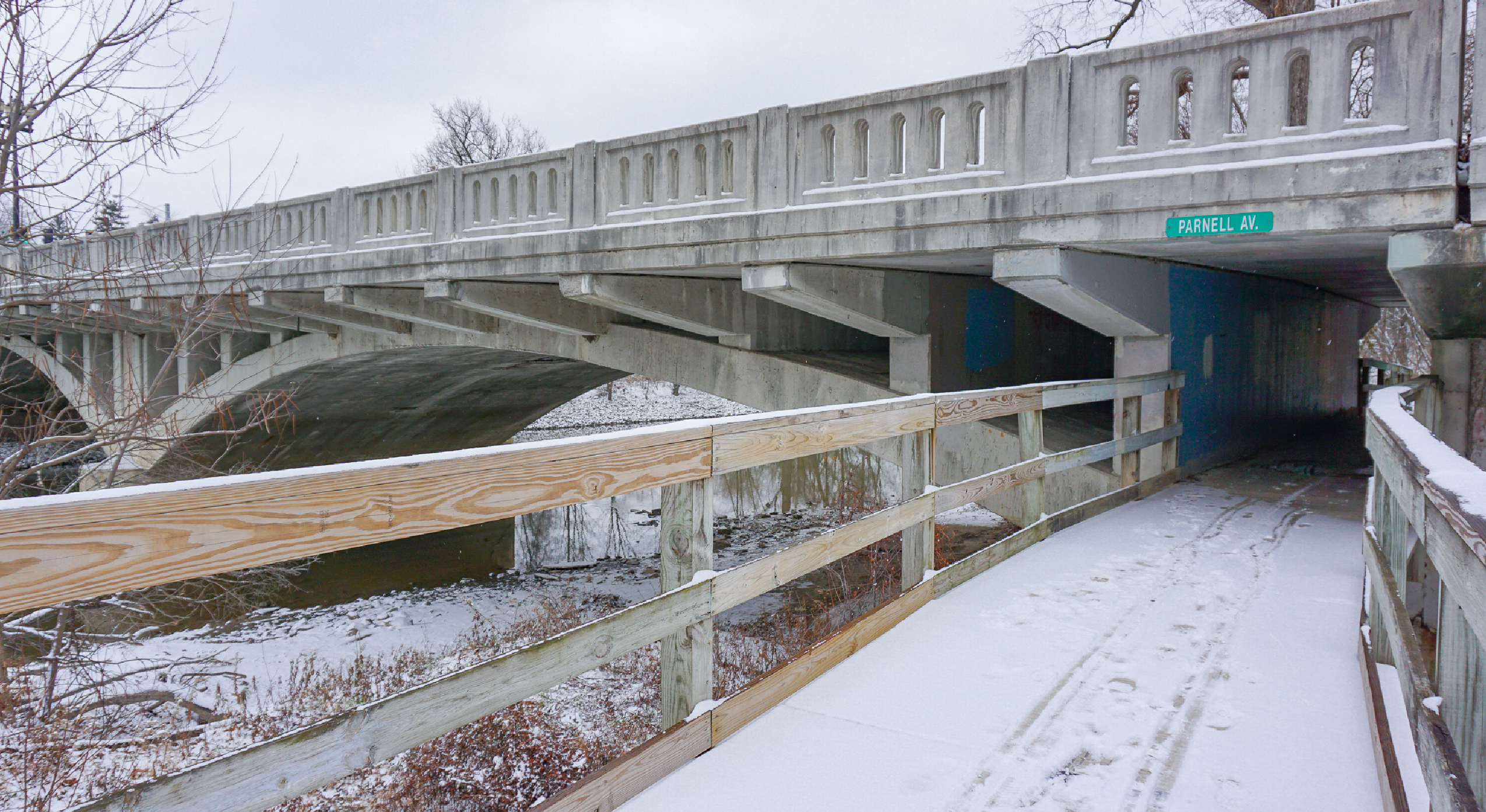
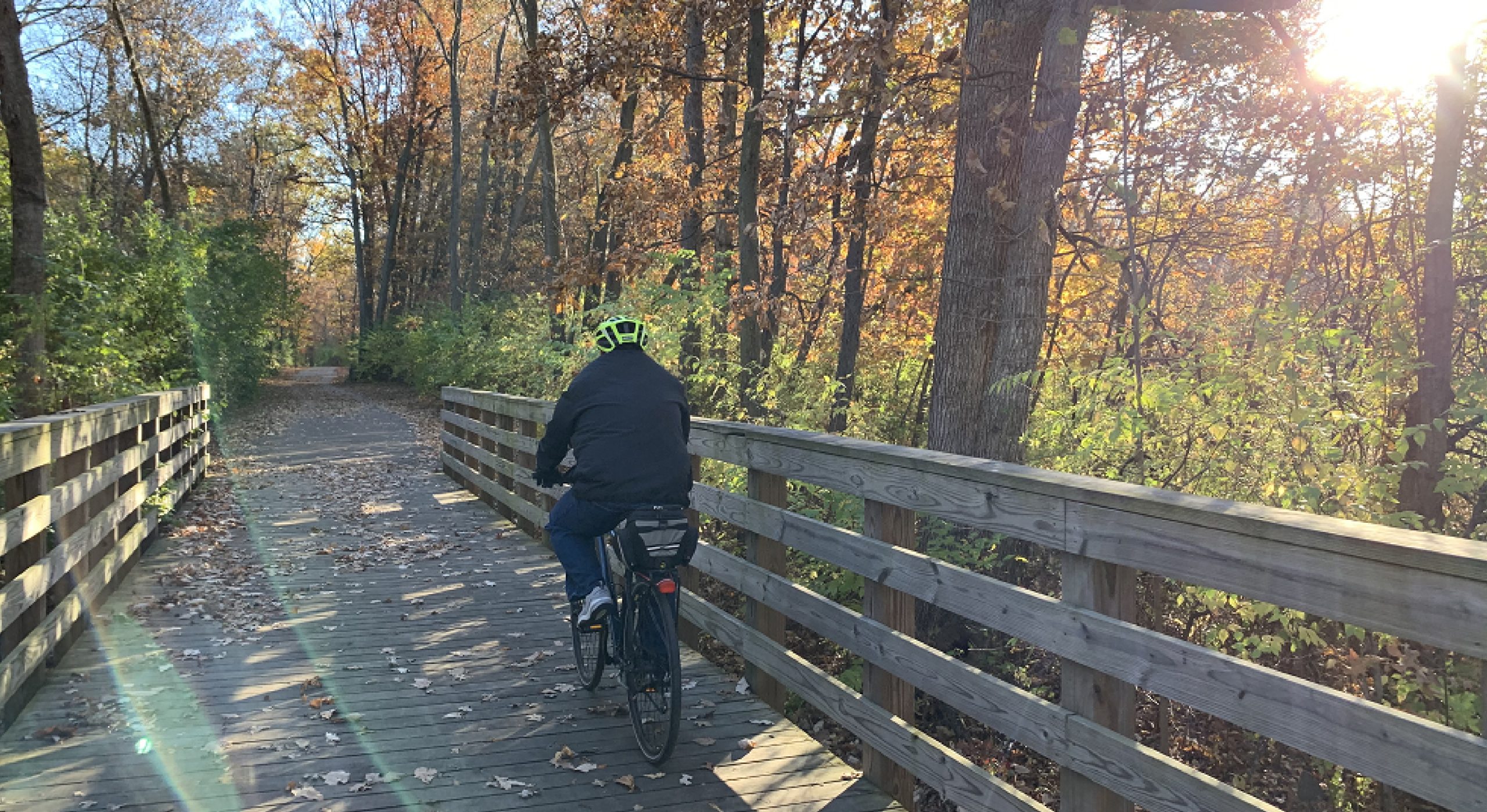
While using the trail network, it is likely that you will come across one of the many boardwalks on the system. Many of these boardwalks are located near bodies of water or in areas of heavy shade. Over time, they can become slippery, especially when wet, either due to rain or condensation early in the morning or evening. Always approach these with caution and avoid using too much front brake while riding a bicycle to prevent your front wheel from washing out.
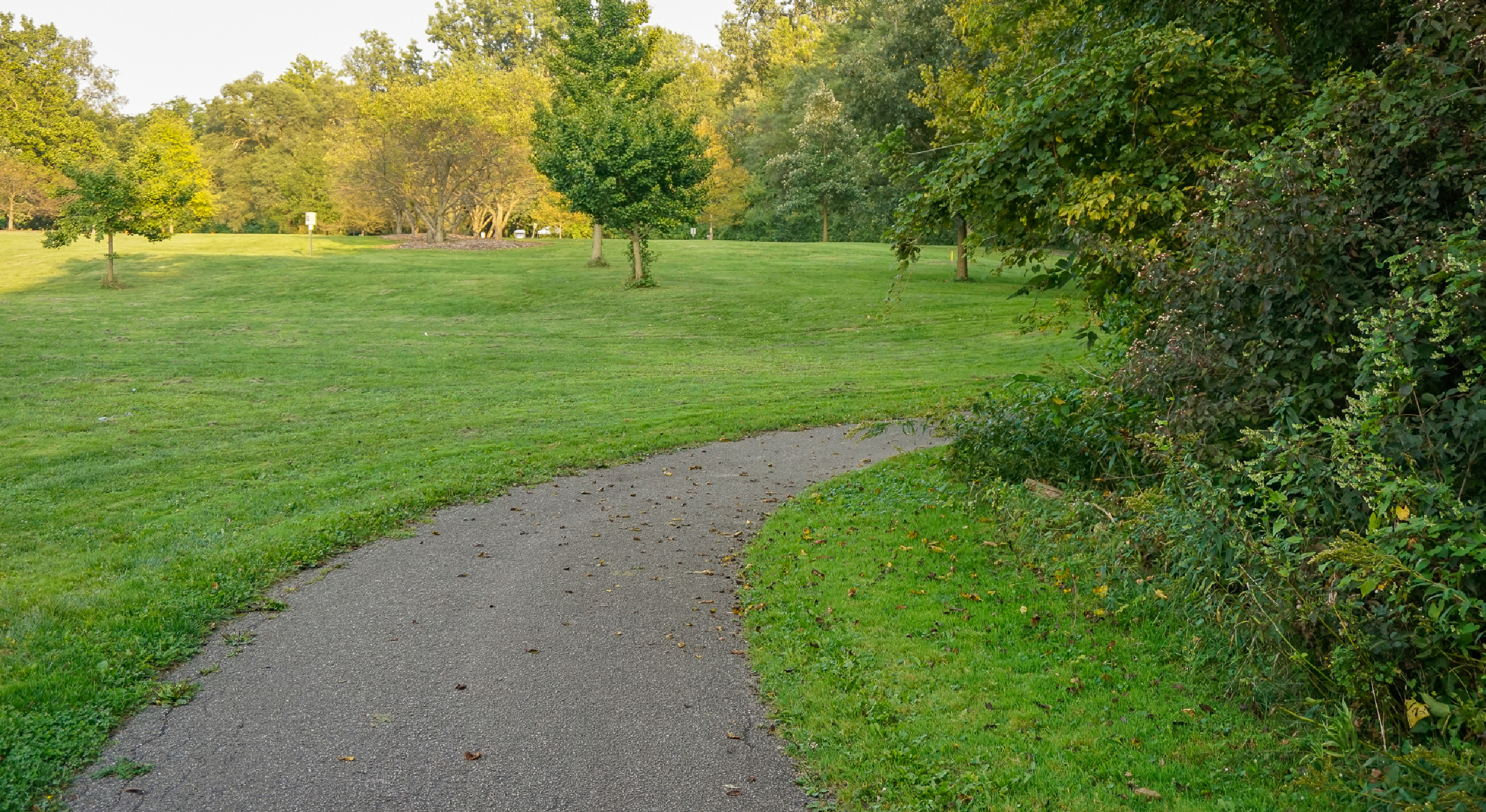
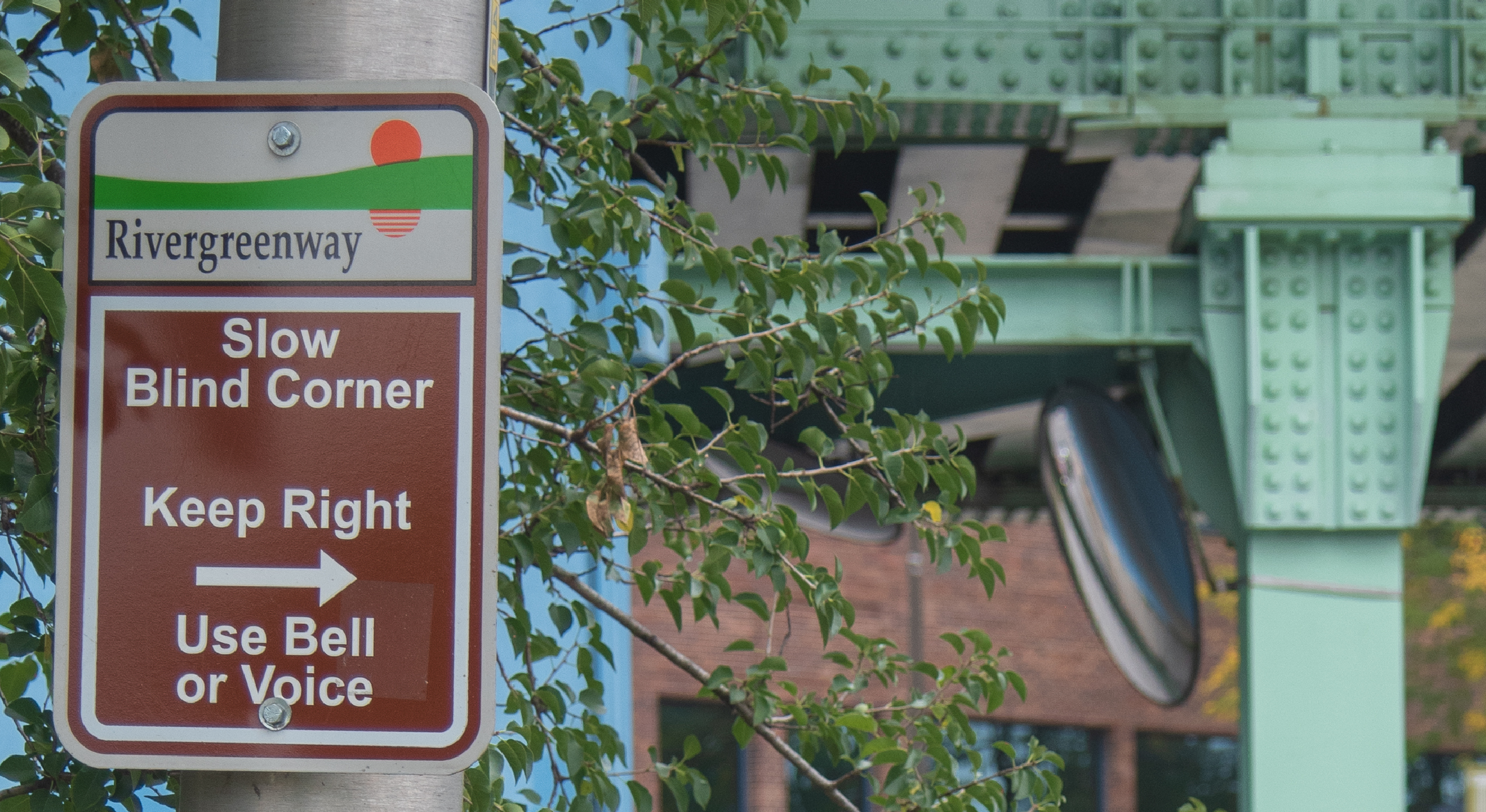
Due to the natural winding nature of many of the trails, it is likely that you will encounter a blind corner, or an area where you are unable to see trail traffic coming from the opposite direction. This could be due to trees or other brush, or when crossing under one of the many road underpasses. In these situations, it is good practice to slow your speed and always stay to the right side of the trail until you are able to gain a clear line of sight. Ringing a bell or making another audible callout is also helpful and lets trail users coming from the other direction know that someone is approaching. Some of these blind corners may have large mirrors to help you see traffic coming from the other direction.
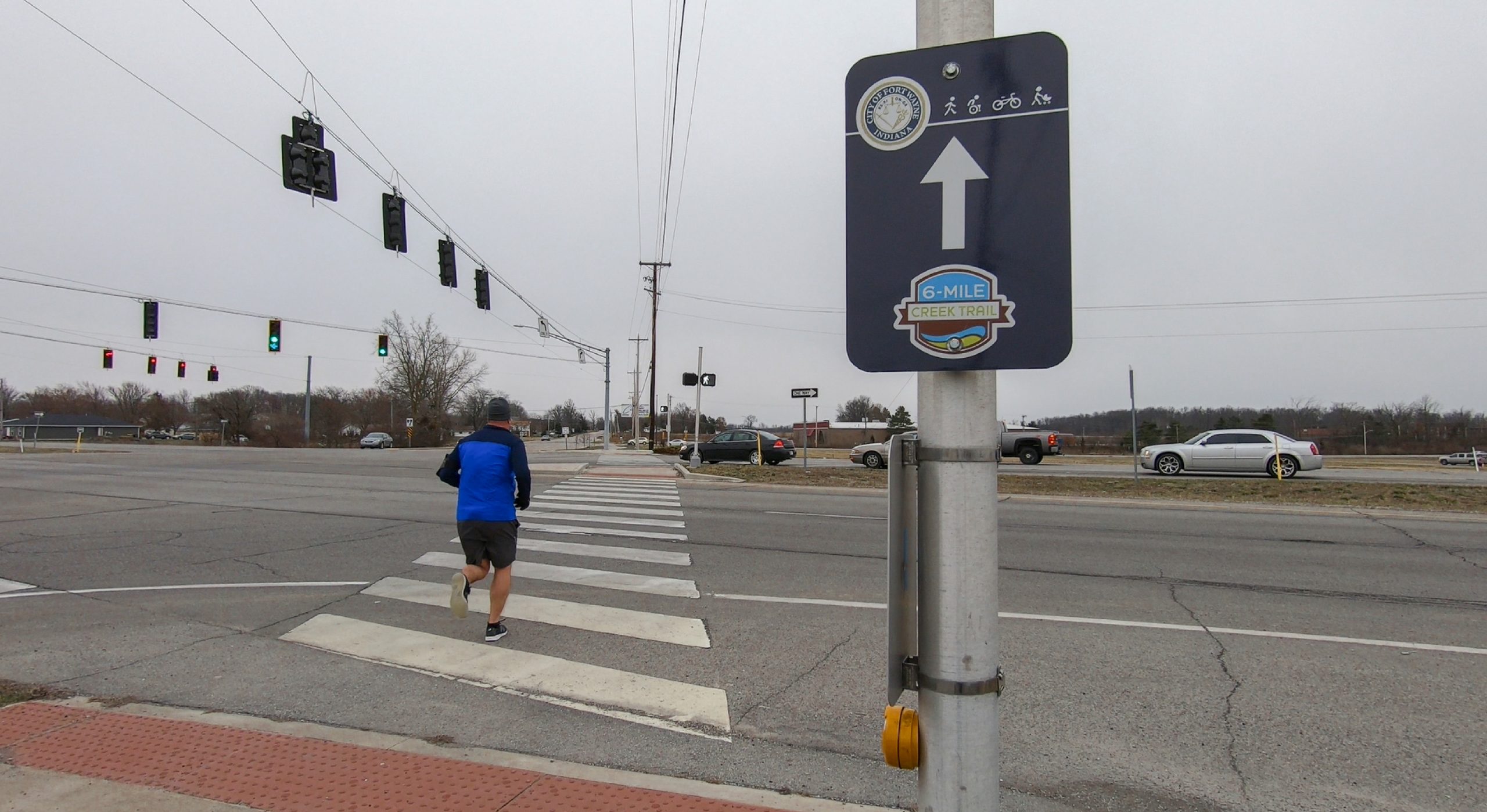
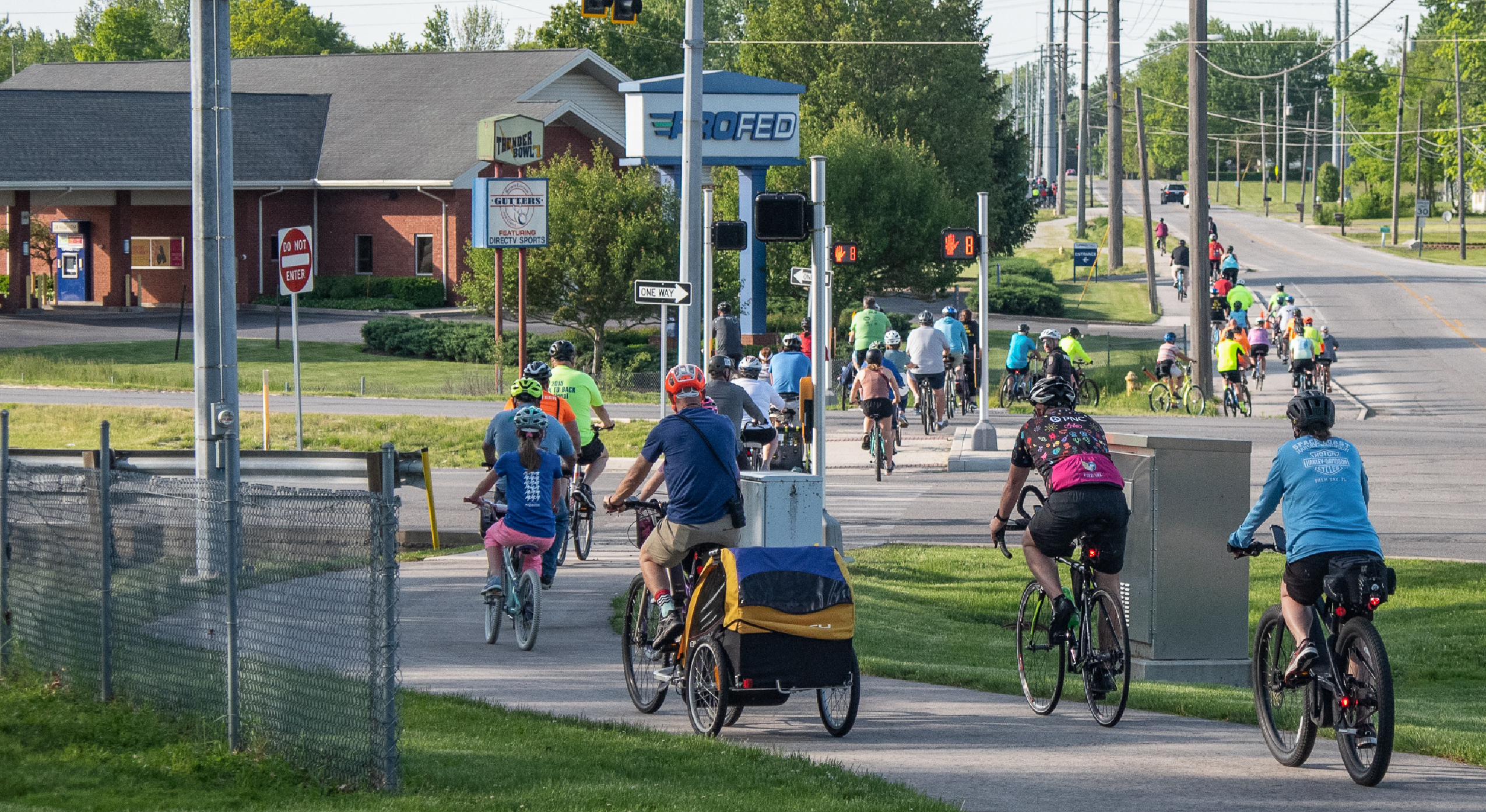
With over 160 miles of trail stretching across the county, you will likely interact with a crosswalk at some point. Always follow all laws at crosswalks and only cross when the signal is lit. It is good practice to make eye contact with any drivers who may be turning in front of you and make sure they are going to yield before crossing, never assume.
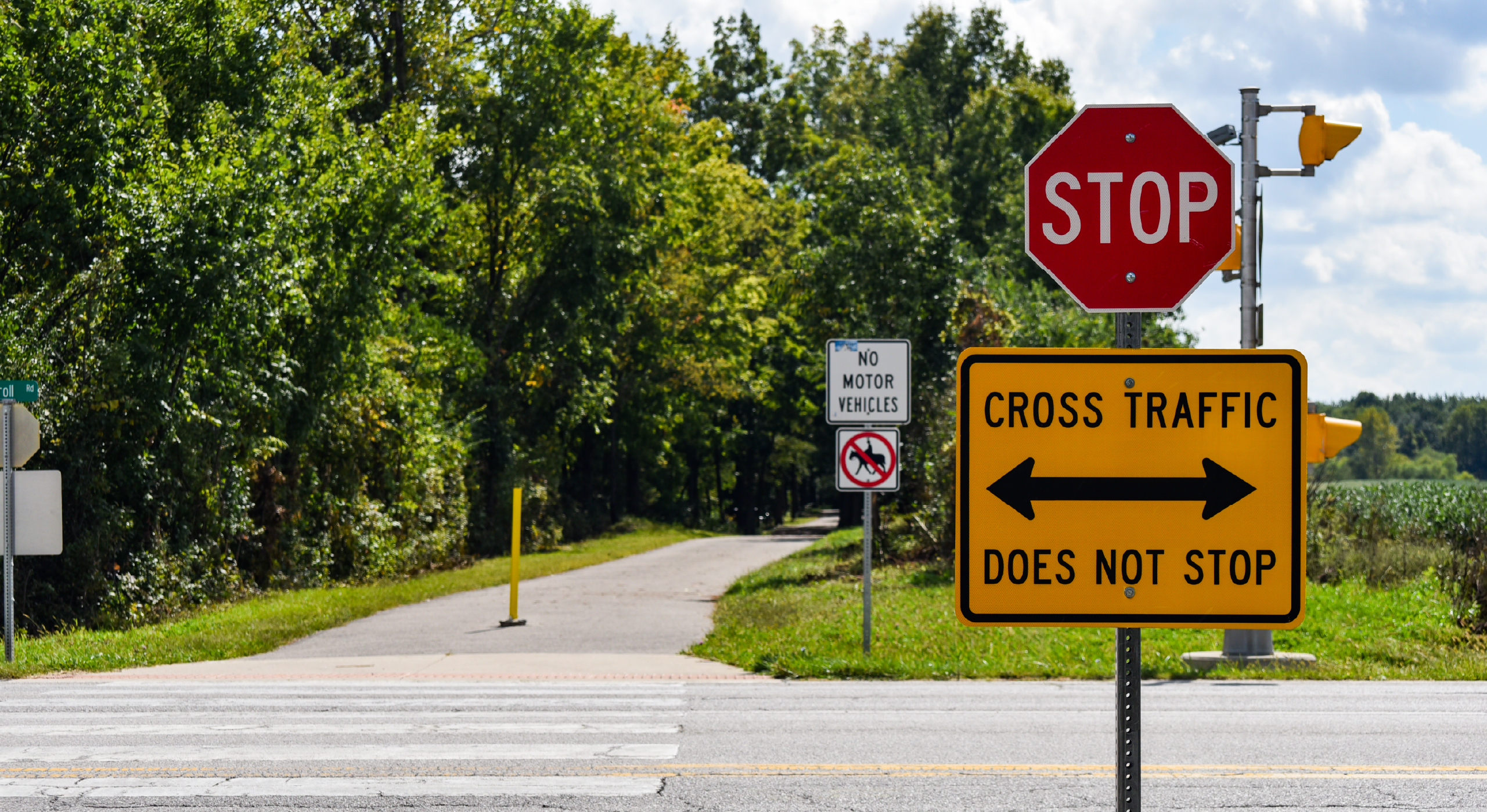
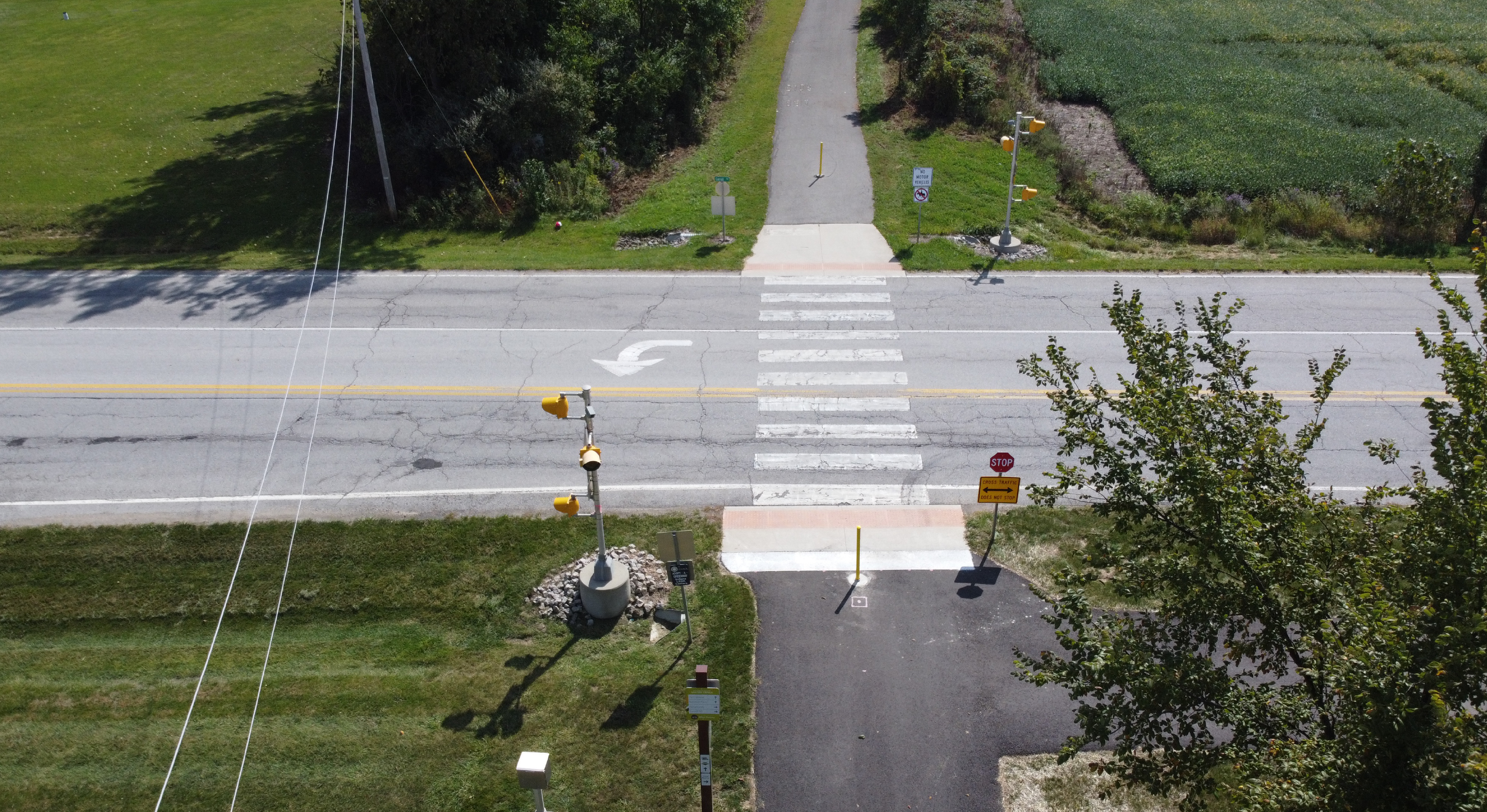
A mid-block crossing is a crossing located in the middle of a block rather than at an intersection. These crossings differ from standard pedestrian crossings at corners because they do not include push buttons or pedestrian signal lights. Mid-block crossings are simple in design and safe when used properly. Click here to learn more about the key do’s and don’ts for both trail users and drivers to help ensure everyone can cross safely and confidently.
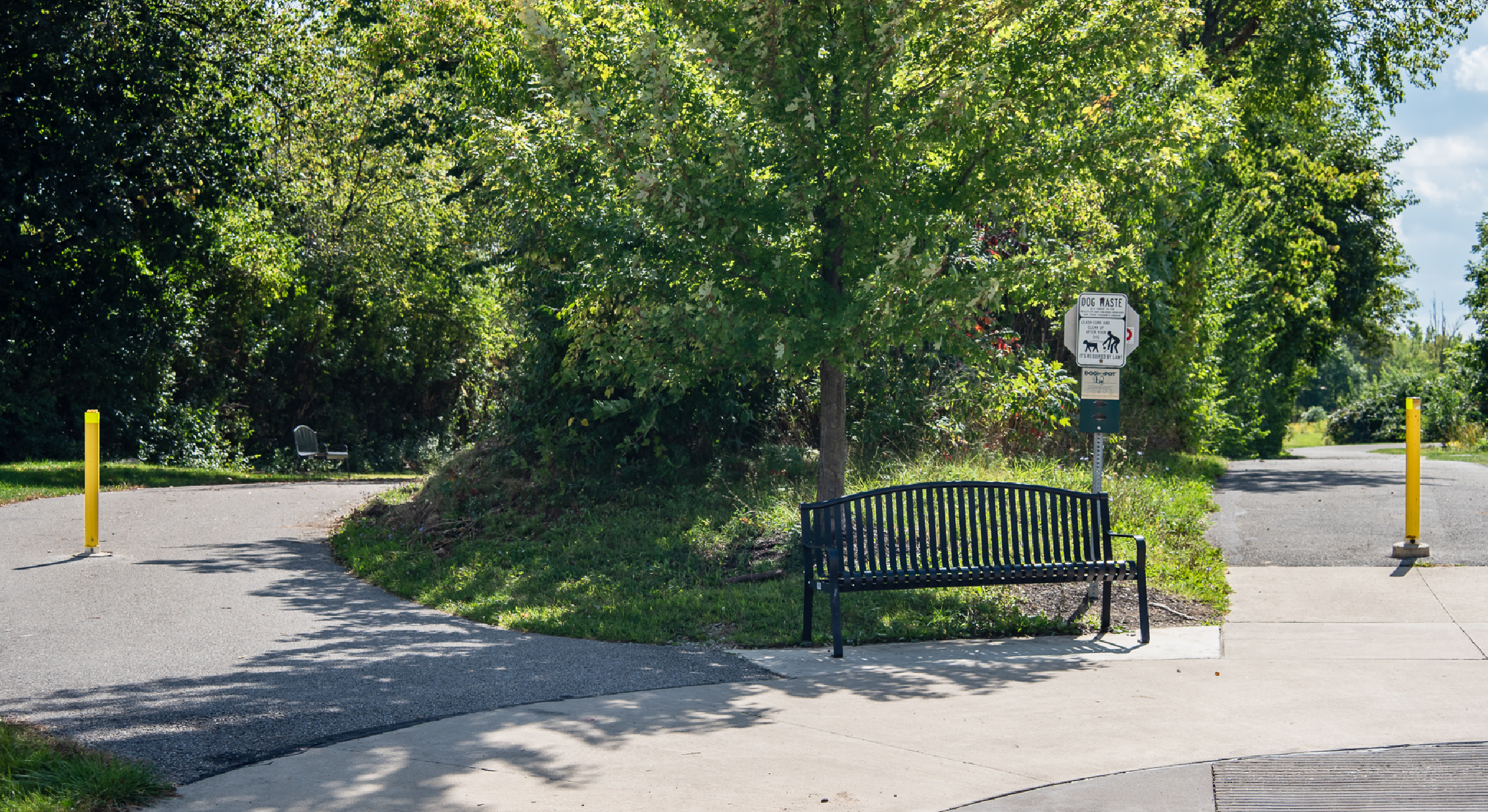
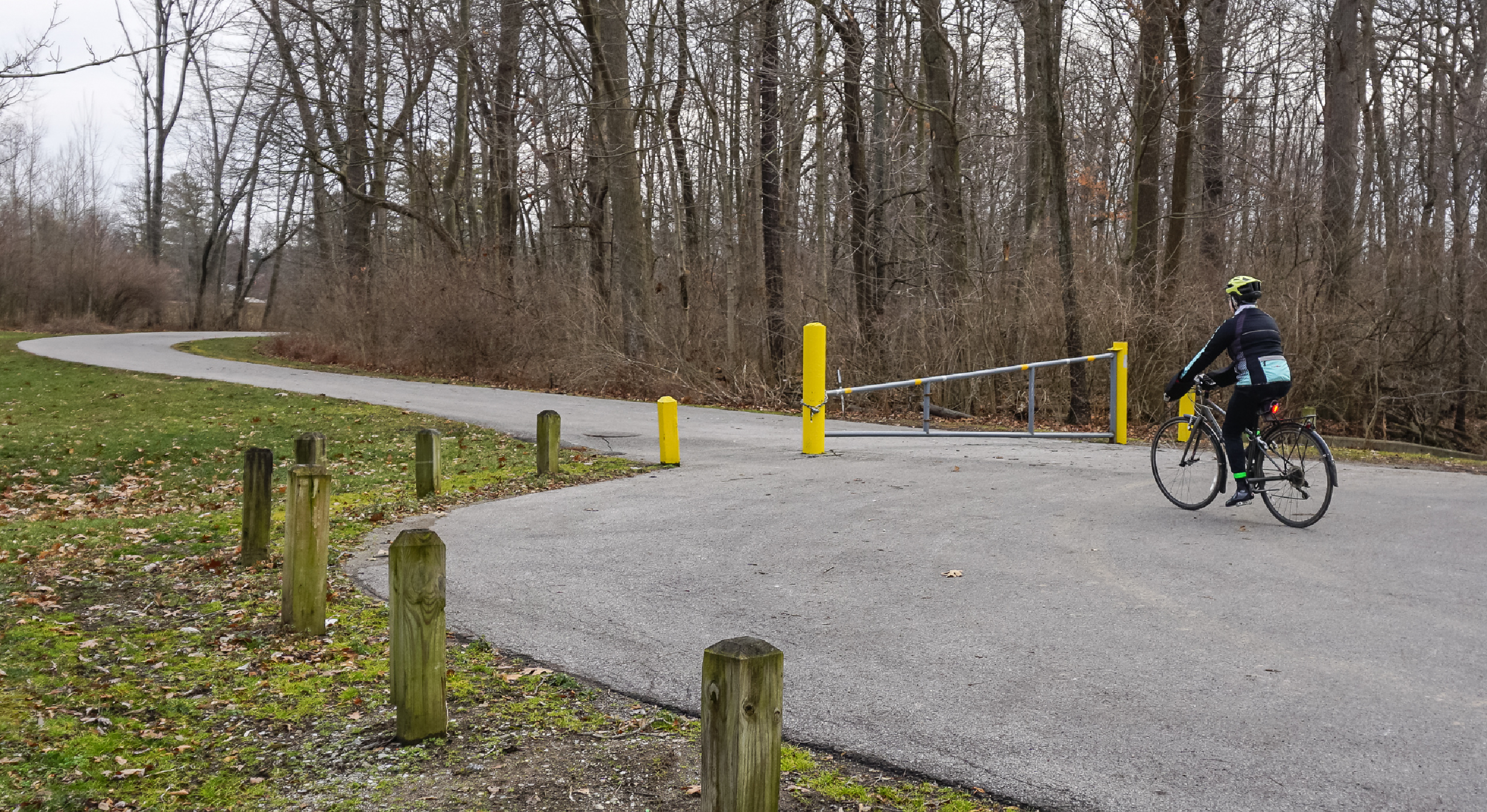
Bollards are the yellow concrete or metal poles located at many street intersections designed to deter vehicles from entering the trail. While they are designed to stop cars, they have also been known to stop a distracted trail user from time to time, which is never good. When riding with a group, it is always good to call these out audibly and point to them, letting riders behind you know they are there. We have been working to have black stripes painted on all of the bollards on the system to add contrast and make them more visible to all users.